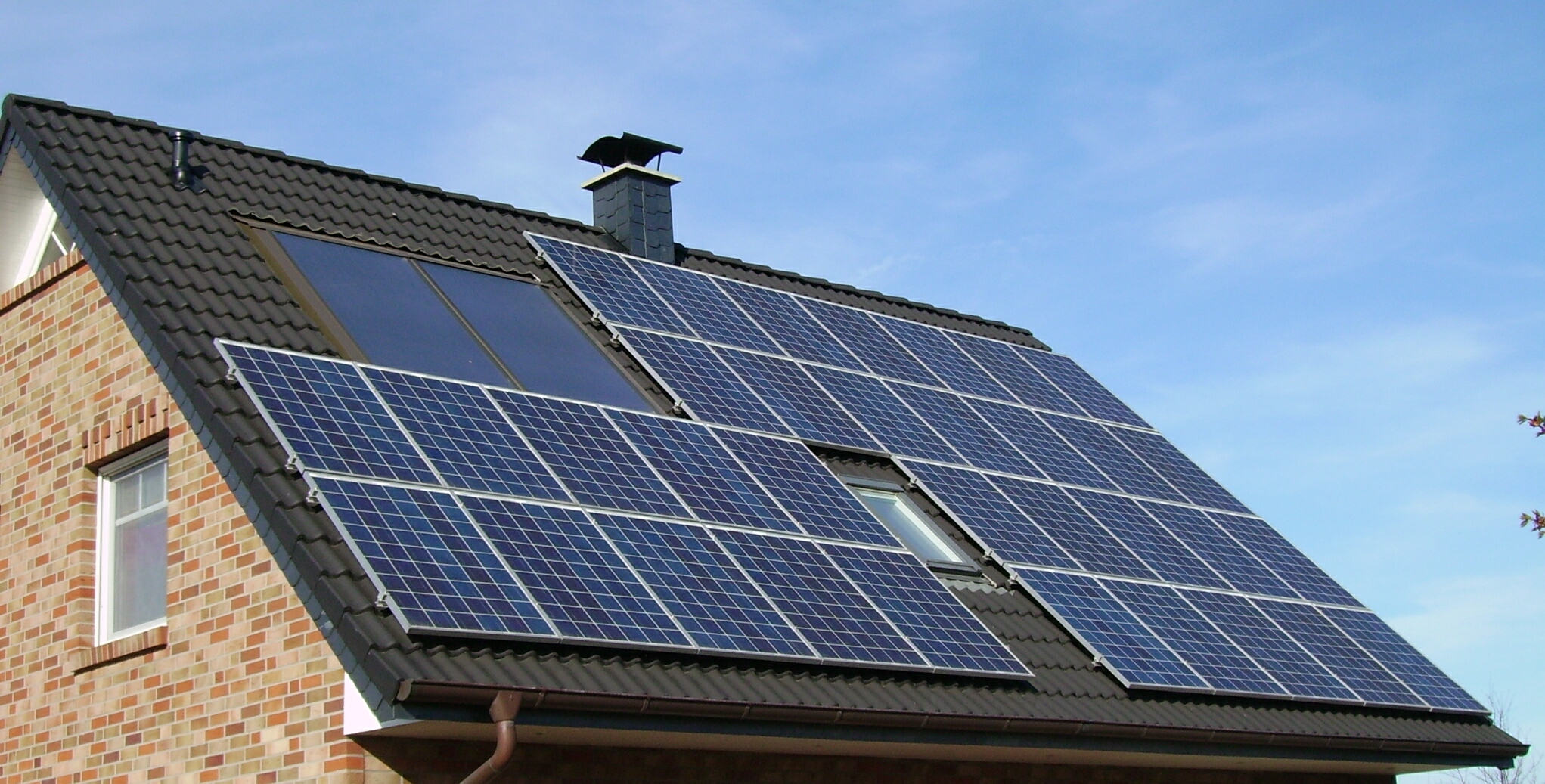
Why Panel Technology Matters More in Canada
Canadian installations operate under conditions that differ meaningfully from the standard test conditions (STC) used to rate panel efficiency — 25°C cell temperature, 1,000 W/m² irradiance, and a specific air mass spectrum. In practice, Canadian panels spend a large share of their operating hours at temperatures well below 25°C, under partial cloud cover, or partially shaded by snow accumulation in winter.
Panel technology determines how a module responds to each of these variables. Two panels with identical STC efficiency ratings can produce materially different annual outputs in Toronto, Edmonton, or Vancouver because their temperature coefficients and low-light performance characteristics diverge.
Monocrystalline Silicon Panels
Monocrystalline panels are manufactured from a single silicon crystal grown into a cylindrical ingot, then sliced into wafers. The uniform crystal lattice gives charge carriers fewer grain boundaries to cross, resulting in the highest cell efficiency available in standard commercial formats — typically 19% to 23% for residential modules as of 2025. Premium PERC (Passivated Emitter and Rear Cell) and TOPCon variants reach 22% to 24%.
Temperature Coefficient
All silicon panels lose output as cell temperature rises above 25°C. The rate of loss is expressed as the temperature coefficient of power (Pmax), typically listed in %/°C on the data sheet. Monocrystalline modules generally show a Pmax coefficient of approximately –0.29%/°C to –0.35%/°C.
In Canadian winter conditions, cells routinely operate at temperatures significantly below 25°C. At –10°C — a common ambient temperature in many provinces — a panel with a –0.32%/°C coefficient actually produces slightly more power than its STC rating, because lower temperature improves electron mobility. This cold-temperature bonus is modest but real: roughly a 1–3% gain per sunny winter day.
Low-Light Performance
Monocrystalline panels maintain relatively consistent efficiency across irradiance levels down to roughly 200 W/m². Below that threshold, efficiency degrades more sharply. In heavily overcast maritime climates like the BC coast, this matters less than in clear-sky inland provinces; however, monocrystalline panels are generally considered adequate for all Canadian regions.
Degradation Rate
Industry data indicates monocrystalline panels degrade at approximately 0.5% per year, with most manufacturers warranting at least 80% of rated output after 25 years. Higher-tier manufacturers now offer 30-year linear power warranties with annual degradation rates of 0.4% or better.
Polycrystalline Silicon Panels
Polycrystalline panels are produced by pouring molten silicon into moulds rather than pulling a single crystal. The faster, less energy-intensive manufacturing process historically made them cheaper per watt, though that price differential has largely disappeared as monocrystalline manufacturing volumes scaled up through the early 2020s.
Cell efficiency for polycrystalline modules typically ranges from 15% to 18%. The grain boundaries in the crystal structure increase recombination losses, reducing both peak efficiency and low-light performance relative to monocrystalline alternatives.
Current Market Position
By 2024, polycrystalline panels had largely been displaced in new residential installations in Canada. Most major manufacturers have concentrated production capacity on monocrystalline and PERC lines. Polycrystalline panels are occasionally available at a slight discount, but the efficiency difference typically means a homeowner would need more panels — and more roof space — to achieve the same annual output.
Thin-Film Panels
Thin-film panels deposit photovoltaic material in layers micrometres thick onto a glass, plastic, or metal substrate. The three commercially relevant thin-film technologies are cadmium telluride (CdTe), copper indium gallium selenide (CIGS), and amorphous silicon (a-Si). Each has different performance characteristics relevant to Canadian use cases.
CdTe (Cadmium Telluride)
CdTe panels, primarily produced by First Solar, achieve module efficiencies of 17% to 19% in commercial residential formats. Their temperature coefficient is slightly better than crystalline silicon at roughly –0.28%/°C. More significantly, CdTe panels show superior performance under diffuse, low-angle light — a meaningful advantage for northern latitudes and overcast coastal climates. First Solar's spectral response data indicates their CdTe modules outperform crystalline silicon on cloudy days by 5–10% in energy yield.
A practical concern for Canadian homeowners is disposal. CdTe contains cadmium, classified as a hazardous substance under the Canadian Environmental Protection Act (CEPA). End-of-life recycling must be handled by certified facilities. First Solar operates a take-back program that covers their products, but this should be confirmed before purchase.
CIGS
CIGS panels deliver efficiency comparable to lower-tier monocrystalline products — typically 14% to 17% — and share thin-film's low-light advantages. They are available from a smaller set of manufacturers and at price points that do not currently offer a compelling residential advantage in Canada.
Amorphous Silicon
Amorphous silicon panels are low-efficiency (6%–10%) and primarily used in low-power consumer electronics and building-integrated applications. They are not appropriate for standard residential rooftop systems where space is constrained.
Comparison Table
| Technology | Typical Efficiency | Temp. Coefficient (Pmax) | Low-Light Performance | Annual Degradation |
|---|---|---|---|---|
| Monocrystalline (PERC/TOPCon) | 20–24% | –0.29 to –0.35%/°C | Good | ~0.4–0.5%/yr |
| Polycrystalline | 15–18% | –0.35 to –0.40%/°C | Moderate | ~0.5–0.6%/yr |
| CdTe Thin-Film | 17–19% | –0.28%/°C | Very Good | ~0.4%/yr |
| CIGS | 14–17% | –0.30 to –0.35%/°C | Good | ~0.5%/yr |
Snow Load and Physical Durability
In provinces such as Ontario, Quebec, Manitoba, and Alberta, panels must be certified for the applicable snow load and wind speed per National Building Code of Canada requirements. Standard 60-cell and 72-cell crystalline panels are tested to 5,400 Pa mechanical load per IEC 61215. This is sufficient for most Canadian locations, but installers in heavy-snow regions (e.g., northern Ontario or the Quebec Laurentians) should verify local ground snow load figures with an engineer.
Frame design affects snow shedding. Panels mounted at steeper tilt angles (35°–45°, appropriate for Canadian latitudes) shed snow more effectively than shallow-mounted arrays. Frameless glass-glass panels present a smoother surface that also improves passive snow removal.
Selecting a Panel for Your Installation
For the majority of Canadian homeowners installing a grid-tied rooftop system, monocrystalline PERC panels from a tier-one manufacturer represent a practical baseline. The key parameters to compare when evaluating specific products are:
- STC efficiency: Higher efficiency means fewer panels needed for a target system size.
- Temperature coefficient (Pmax): A lower absolute value means less loss on hot summer days.
- Linear power warranty: Confirm the degradation rate guaranteed over 25 years, not just the end-point figure.
- Mechanical load rating: Ensure the IEC 61215 mechanical load rating meets or exceeds local requirements.
- Product warranty: Manufacturer product (materials and workmanship) warranties of 10–25 years are now common among tier-one suppliers.
The Natural Resources Canada (NRCan) RETScreen modelling tool allows homeowners to input their location and proposed system to estimate annual output based on historical irradiance data — a useful cross-check before committing to a particular panel selection.